Showing posts with label clive james. Show all posts

Saturday, 2 April 2022

ARTIST TO ARTIST: KRITI BAJAJ, INDEPENDENT EDITOR AND WRITER

photo credit: Sahil Bajaj


I'm a mountain person. I was three years old when I first visited my grandparents' secluded home in the Himalayas. Though I was too young to realise it at the time, the sense of possibility that this new world opened up would stay with me.
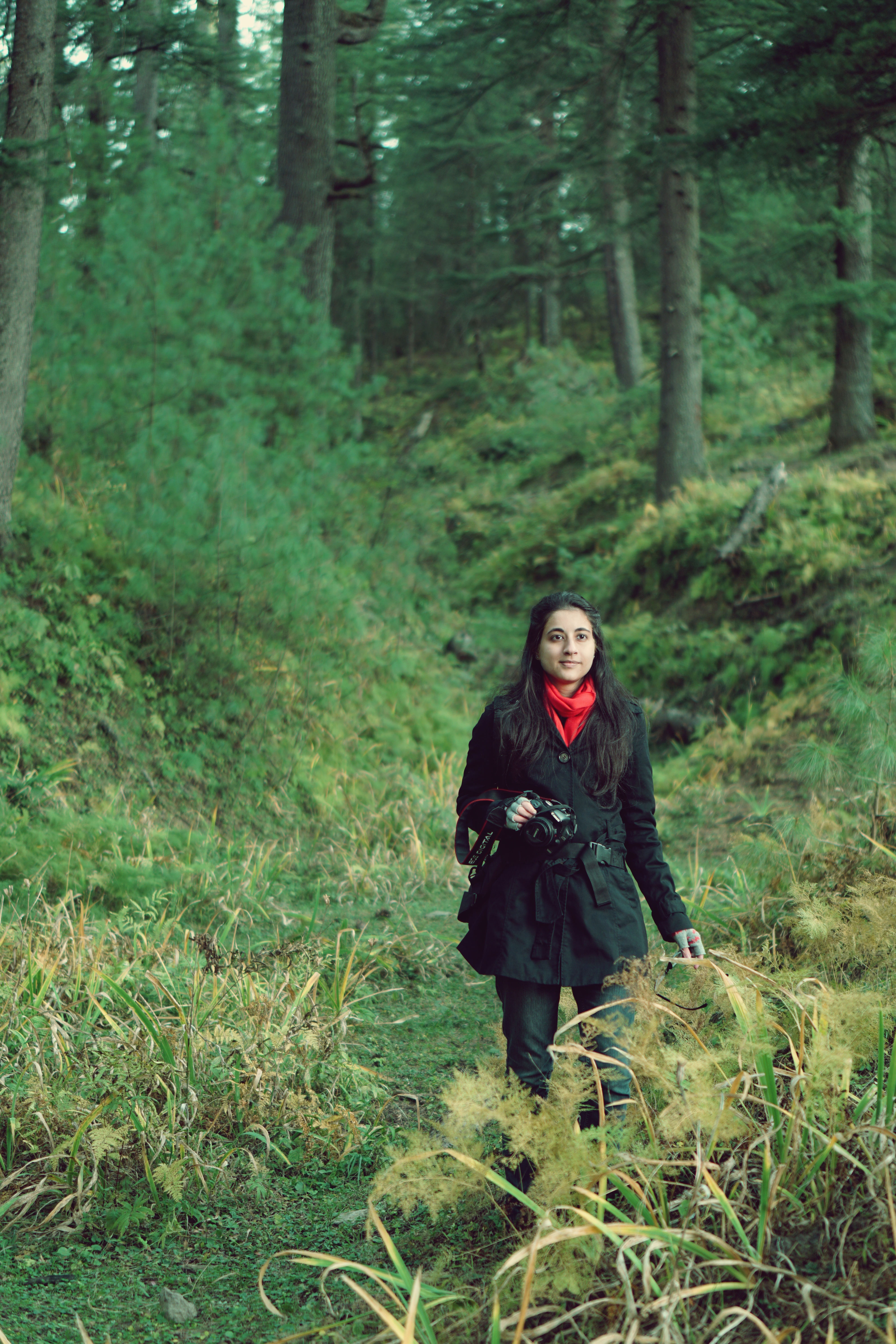
 

Himachal Pradesh, 2016, photo credit: Sahil Bajaj

Kriti, this is how you begin to describe yourself on your website: I've lived in cities my entire life – Bombay, Delhi, London – but every so often, I have a longing for grass studded with clover, starry skies and a majestic view that changes with each cloud and shadow, but is always constant. I mean, is it any wonder we ‘found’ each other? Poets just do! 'Poet’ may not be a term you would use to describe yourself, but I mean it in the way a writer uses her language. So, there you are, three years old in the Himalayas… were there books there? Did you start writing as a child?


There's a whole wall of books, though I can't remember whether this excited me at that age – I was a bit of a late bloomer when it came to reading. It's one of my favourite nooks in my grandparents' home. There was no internet here until a few years ago, and even phones arrived relatively recently. As a child, I used to communicate with my grandparents through letters. Many of the books are encyclopedias and reference texts on everything imaginable; my grandfather had many interests, from carpentry to photography. He once bought the contents of an entire bookshop! 


photo credit: Kriti Bajaj

I used to write poetry before I ever wrote anything else. I remember the first 'serious' poem I wrote was in fifth grade, and it was probably very derivative – I mean, I was only ten – but it felt like I'd found my calling. I'd come across little snippets of poetry at my grandparents' home, newspaper cuttings of poems by Patience Strong that my great-grandmother used to send to my grandmother, which I found wonderfully simple and musical. My nana also loved poetry and would recite some of his favourites often – Omar Khayyam, Swinburne, Henley – and inevitably start crying a few lines in. I wrote poetry all through my school and college years, with rhymes gradually giving way to free verse, and imaginative themes being replaced by real experiences.


There were a few years between the first time I met Clive James and the second. It was during our second encounter that he told me about a young friend he had made on the oncology ward (he and I met on a less specific infusion ward), only to lose her to a rare bone cancer. This friend happened also to be your dear friend, Shikha. Tell us a little about 'Oblomov'?


I met Shikha (known to the world as Oblomov) in my final year of college, when we were editors at a Model United Nations conference, leading a team together, completing each other's sentences and finding that it was very peaceful to curl up in our cabin rather than attend the sessions. We did our Masters in London at the same time too. The best introduction to Shikha is through her own words, so I will direct readers to her beautiful blog. So many amazing people found Shikha through this, and she connected kindred spirits, like you and I. 


Kensington Gardens, Oct 2011, credit: Kriti Bajaj


Clive James, of course, made her very happy through his enthusiastic support of her writing, and his wonderful sense of humour, some of which she shared with me. I reached out to him once in April 2015 with sad news, and we exchanged a few notes. He was very gracious; his words brought comfort. 


Since 2016, you have been on an ancestral quest to discover more about your family tree. Tell us a little about that? I often find myself googling my grandfather who was the first Muslim Chief Justice of Udaipur and aide-de-camp to the Sultan of Zanzibar. I want him to just pop up! I do the same for my great-grandfather, who was another High Court Judge, from my maternal Parsi side. Both were Khan Bahadurs. My maternal grandfather was in the railways like your great grandfathers. Trying to trace the female line is much harder, unless you have someone doing the oral remembering, like my mother. I am so envious of your ability to access from direct sources and digitise your findings - future generations will no doubt be thankful to you!


That's literally how I took a step forward with my research – I Googled my great-grandfather and he popped up! I'd done this for years, but there was nothing. I'd heard stories, seen photos, made family trees, but I was desperate for more. Then I went on a trip with my grandmother to her parents' last home, my first time there, and I felt really close to them even though I'd never known them. When I returned, information was awaiting me. I think the universe was sort of collaborating with me by giving me what I sought right after this trip.

photo credit: Kriti Bajaj

An entire family tree appeared, going back generations. It made me realise that there were ways I could do this research myself. I didn't actually end up using much of the information since I wanted to verify everything on my own, but it was a start. Since then, I've been learning about genealogy through online courses, resources, Facebook groups, and I recently attended my first genealogy conference too. Of course, as you say, the availability of records has made it much easier to trace the lines and connect with more people, places, and contexts. I'm about to embark on research of another branch of my family, for which there will be far less information (and perhaps a lot lost during Partition), but interestingly, we do have access to a handwritten family tree in Urdu that might give us something to work with! 


You went to Lady Shri Ram College. Tell us more about this experience - what is the college’s history? Why were/are you drawn to German particularly? Was it for German film appreciation? 


LSR is a women’s college affiliated with the University of Delhi, though the campus is separate from the other colleges of the university and feels a bit like its own little world. It was founded in 1956 to encourage and enable the higher education of women. My years here were definitely a turning point, because up until then, I'd been more interested in studying the sciences than the arts. But literature was the perfect subject and opened my mind in many ways. I think both the colleges I've attended – LSR and SOAS in London – have shaped and added nuance to the way I view the world and what's happening in it. 


Lady Shri Ram College, Delhi, credit: Kriti Bajaj

I started learning German as a third language in school when I was ten. We had three options: German, French and Sanskrit. I felt drawn to German mostly because it was the underdog and we were tempted with promises of exchange programmes to Germany (which never materialised). I also attended weekend German classes at the Goethe Institut for about three years when I was in college. I enjoy the worlds and cultures that a new language allows access to, and I've tried learning several over the years, but so far, German is the one that stuck. 


How did your interest in Zoroastrian heritage develop? I love that you were able to source a seven month internship at Parzor. (I’ve written for Hamazor.) Give us a sense of that time?


I wasn't very familiar with Zoroastrianism until I did the internship. Dr. Shernaz Cama was my professor at LSR and is also the Director of Parzor, and I'd expressed an interest in working there. I was taking a gap year after completing my Bachelor's degree as I figured out what to do with my life next, and I wanted to try all kinds of work. I also wanted to save money to buy my first camera, so a paid internship helped me meet both goals! I did all kinds of work during this time, from helping redesign brochures and the website, to assisting with sales, exhibitions and photography, as well as compiling Parzor's tenth anniversary souvenir book and covering the occasion for leading Parsi magazines like Hamazor, Parsiana and Fezana. This was the beginning of my freelance writing journey. 


How extraordinary that you wrote a dissertation on mental health in film years before Deepika Padukone became the first Bollywood actress to openly speak about her mental health. What drew you to this topic?


I was studying anthropology at SOAS, and my interest was specifically in visual and media anthropology. But I had a hard time selecting a dissertation topic. In initial sessions with my supervisor, I presented my plan of writing about the role of photography in war, but somehow it didn't feel like the right fit then. (I do love photography and I'm researching its history independently now.) I thought about other topics that made me really eager to know more, because a dissertation is a fairly long road. I'd written one of my term papers on the complex relationship between anthropology and psychology – it was one of the topics we studied – and I'd been fascinated by it. So I decided to combine that with visual culture. I did find a fair amount of research on the portrayal of mental health in Hollywood films, but only one book about Bollywood. I thought this would be a good gap to fill. 

'East of the Sun and West of the Moon', Nielsen, 1914

Back to Bollywood, or rather not, how did your passion for line dancing come about? Why line dancing rather than … well, anything else? You’d fit right into any English or American dance class with that up your sleeve, but what’s the appeal? (I’m an ex Bharatnatyam and tap dancer, but ballet was definitely my true love. Now I just free style in the house, after hours, when no one’s looking…)


I didn't know what line dancing was until I showed up one day for a trial class by Merry Feet, which is one of the only line dance clubs in India. I'd been looking for a way to be physically active and I'm not really fond of going to the gym, so I thought dancing might be a fun way to care for both my physical and mental health. From the beginning, I loved the music, the way that line dancing brought together so many different dance traditions from around the world, the stories behind them, the philosophy of not chasing perfection but learning and repeating patterns, the inclusiveness. I also liked how it was a community or social dance form, but individualistic at the same time – both in that you don't need a partner (I've also learnt salsa and bachata for a while, and felt quite limited by that, though they are beautiful in their own way), and you have the freedom to express yourself within the structure of the choreography. Because of this, we were also able to learn and practice line dancing online throughout the lockdowns in the last two years. 


'In Powder and Crinoline', Nielsen, 1913


I also taught line dancing for a while before moving to Bombay. One of my happiest accomplishments – and this is what I love about teaching, mentoring and also learning – was watching the steady rise of confidence as people went from being very hesitant in the beginning to guiding new learners a few months in without a second thought!


'Untitled', K K Hebbar, 1911-1996

About your many years as editorial manager for an art auction house, you say this: the real perk is getting to lay eyes on masterpieces that otherwise remain hidden away in private collections, as well as stunning gemstones, and centuries-old books and photographs. Tell us about one masterpiece in particular (or a few that spoke to you).


One of the first auctions I witnessed after joining Saffronart featured a beautiful painting by Nicholas Roerich. I'd been to his former home in Naggar a few years prior, and there are paintings there, but this one was quite different, almost haunting. Another artist whose work I really like is Jehangir Sabavala. Apart from art, I was fascinated by 19th century photographic processes like ambrotypes and stereoscopes, as well as rare and limited edition books such as those with illustrations by Kay Nielsen and Arthur Rackham. 


'The Dance in Cupid's Alley', Rackham, 1904

The colleague who sat nearest to me was in the jewellery department and would routinely receive boxes of glittering creations that were hard to look away from. I've never really been into jewellery but I do like beautiful things, and I've learned everything I now know about gemstones and techniques (which is probably just scratching the surface) from her. She even guided me when I was picking out my engagement/wedding ring!
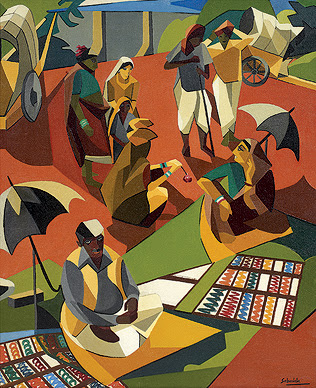
 

'The Bangle Sellers', Sabavala, 1954

Your 2021 calendar or cookbook of food inspired directly from books is so worth reading. Of all your many worthy accomplishments, I would recommend this as the most delightful and delicious. Which brings me to my final question - as a fellow blogger and non-fiction writer who secretly longs only to write fiction (but seems never to do so), do you fantasise about writing a novel? I ask this because I can easily imagine your novel - it will weave in the art world, and the food world, it will possess the photographer’s eye for detail and the researcher’s eye for historical/ genealogical accuracy. Am I way off course here? And if so, what dreams do you dream of next?


I think everyone who enjoys writing hopes to write a novel some day! When I was young and innocent, I attempted starting a couple – a fun exercise while it lasted, planning the stories, chapters, characters and so on. But I haven't attempted anything of the sort in a long time. The closest I've come is writing several dozen pages about my family history, a compilation of my research. I've always thought I'd write a book someday, when the right story comes along, so for now, I'm just waiting patiently. I used to think it would be fiction, because that's what I chiefly read, but I'm not so sure anymore. I've read some delightful non-fiction, and I wouldn't be averse to it if the story intrigued me. I have some latent ideas, though none are quite developed yet. 


This year, I want to build my business further, continue my research, put time and resources into honing existing skills, and hopefully learn a few new ones. I also hope I'll get a chance to travel a bit and have a few little adventures here and there. 


from Kriti's blog 'Onwards'


Kriti, Clive’s sign off on all his emails to me was ‘Onwards’, the title of your blog, which was born months before you ever interacted with him. As you say, there are connections in everything. You chose 'Onward' as the title for your blog as a reminder to keep moving, keep learning, keep trying. Even when you don't really know where you are going, you remember that journeys are important. I wish you all the success and adventures your writing fingers and creative heart desire. Thank you for opening a little window into your life for my readers! 


Kriti can be found at her website www.kritibajaj.com


photo credit: Kriti Bajaj

Wednesday, 7 October 2020

CLIVE JAMES: NOTES FROM THE MARGINS OF A BLUE WARD


It would have been Clive James’s eighty-first birthday today. 

Lots of people have October birthdays; friends of mine, a goddaughter of mine. But the birthday of a friend you can never meet again, a friend who also, now, has a death day, imbues the month with even more autumnal poignancy than usual. 


He was, after all, the one who went viral with his Japanese maple leaf farewell. The death of the tree preceding his own was just the sort of joke the kid from Kogarah lived for. In his absence, it is harder to find the jokes, here, on the ward we shared. 


Clive’s yawns were leonine. He turned the infusion bay into his drawing room by holding no measure of that sound in discretion. He always fell asleep at a certain point during the drip of immunoglobulins into his vein, something I have never been able to do in my ten years of intravenous therapies. Aside from his genuine sleeps, the famous critic was also able to drop into utterly phoney narcoleptic faints when approached by an undesirable fan. One eager gentleman in particular acted extraordinarily upon Clive’s ability to stay conscious in the face of a bore. Poor dude, I tried to think, the milk of my human kindness attempting to overcome the bald truth: the gentleman in question really is an unstoppable torrent of opinion. 

There are many lonely people shepherded by ill fate into this place. Clive was not a philanthropist.


Sometimes, in his eagerness to skedaddle home, Clive would forget some portion of his garments. His cardigan. A scarf. But also, his slippers. Shuffling off in his socks, I ahoyed him back. (His drawing room, remember.) I was as unimpressed by his fashion as he was entertained by mine. His was sixties French philosopher, black, with crumbs. Mine was, is, anything to brighten the spirit. My soft, olive green beret had been eyed covetously so many times, that when the latest carcinoma had been shelled out of his skull, I offered it up. He swiped it without a hesitant beat. Goodbye, beret. I miss you, still.


It is only the start of autumn, mizzling days. The fire of joy is yet to come. We are seven months into a pandemic some of us are better suited to. (To or for? Clive would know.) My rabbit warren between home and Addenbrooke’s is traversed less because those three weekly infusions Clive and I shared are now weekly subcutaneous injections I attend to in my own home. Occasionally, I sit out in the garden, but the bees investigate the sticky serum too closely and drive me back indoors. No sub cut for Clive. No surgical masks or social distancing from his beloved granddaughter. No, just the freedom of a poet unbound. 


We were always joking about the spectre. And then one of us would look seriously at the other. Don’t die, said the look. The trouble is, I believed him when his look promised he wouldn’t. Or when he wrote, ‘my infusions have been stopped temporarily, hence my absence from class’ or, ‘I’ve had an op and it went quite well, so I’m coming alert again.’ 

Think about death all you like. It doesn’t help you prepare. Not really. Every poem is a brushstroke, feathering death away. Does it come mightily or lightly? Neither, I think, for Clive. Eighty he may have been in grown up years, but when it came, surely it cradled him softly, like the hug of a tree. No more thorns. The bark didn’t bite. He left the fire for us, and a deep impression in the blue vinyl armchairs, of joy.


All images via The Guardian website article 'Clive James: A Life in Pictures'

Wednesday, 27 November 2019

CLIVE JAMES, ARS MORIENDI

‘Put that down.’ 
Clive always said that, if he thought I turned a phrase neatly. That’s good. Put that bit in. 
‘In’ to the ongoing double narrative of our lives that we were both writing separately even in our moments of togetherness on the Addenbrooke’s infusion ward. 


We met on one ward - D4 – hooked up to the same treatment of intravenous immunoglobulins, both under the care of the same wonderful immunology consultant, Dr Kumararatne - and then a few years later, on G2, the new incarnation. There is going to be a third iteration, but Clive will miss that one.

Death is so annoying. I feel a bit cheated as we all do when the continuity of our conversation with friends gets interrupted. But the nature of a writer is to personally provide the material for imaginary conversations to continue for all of time. Meet a person once and if they make an impression, you can re-meet them. Take down the book from the library of your mind and find the chapter titled ‘Clive’ or ‘Shaista’. In our case, that first meeting in April 2012 on D4 was not destined to be our last. Four years passed from our first meeting and one day a nurse told me that Clive had gone up to another Indian patient and hailed her across the tubes, ‘Shy Star! Lovely to see you again, kid.’ Except it wasn’t me. So I asked the nurse to book our next slots together if possible and on we went for the next three years, him booking in concordance with my dates if I hadn’t done so. We emailed throughout the years. 
It was a strange friendship because Clive saw himself as mentor to a new young female writer. But the not very new or very young writer had no such notion. I was often and often extremely direct with Clive when he made remarks that didn’t sit well with my own sense of self and my feminism. Dude, seriously. You can’t say that! Or at least, you can’t say that and then expect me to take your praise of my work seriously. Clive once said I had a type of arrogance not dissimilar to his. Eek. Make of that what you will. But presumably he never imagined a pipsqueak would squeak back. Or roar back, baring her teeth. Mostly it amused him, and probably made him want to persist with that thread but for the fact that he genuinely cared and eventually ceased to undermine a real friendship. One during which he swiped my favourite snuggly hat. One during which he introduced me to Tom Stoppard. One during which he offered to send an essay of mine about Les Murray to Les Murray. But I never got around to it, because life with illness is an interrupted life. Hold a thread here, concentrate on keeping it unbroken, and another one, just over there, breaks. Les died six months ago.

Clive’s eyes would light up when he saw me. And this was because if I walked on to the ward, I was still alive. If I was alive, there was conversation to be had and a moment to be shared. Preferably a merry one but I never held back on sharing my sorrow, depression or painful reality. I lifted up my eyelid once to show Clive the various shunts and blebs that my glaucoma surgeon has sown in over the long years to save some sight. And Clive wove the moment into one of his poems. 
A year before we met for the second time, Clive had been in correspondence with and then lost a fellow cancer patient. She was, believe it or not (but if you have read that article you will know this to be true), also Indian and, also a blogger. Shikha Chhabra wrote under the pseudonym Oblomov; her blog was titled Oblomov’s Sofa, and Clive mentioned her in the Guardian. It was a respectful nod he offered her, one that meant for a brief sweet while, Shikha was the acclaimed writer she was always meant to be. She died at 24, so losing me to an early arrival of Death was not implausible. And I have brushed that cloak - or did the cloak brush me? Either way, it has not been my time yet to cause that particular clutch to the heart and breath that hearing of Clive’s death caused me. I am writing because he would expect me to. Because he’d think it a wasted opportunity and because I know he always checked my blog, ostensibly to see what I was up to, but also to see if I was writing about him. He was rather disappointed that I hadn’t brought the ‘yoof’ in as he once had hoped I might. 

I have IVIg tomorrow. It’s a Thursday. And Clive won’t be there as he hasn’t been for the past several months. In his last email he made light of a recent operation, and I chose, ridiculously, to pretend he just might merry his way back to the ward. Even though I knew he wouldn’t. But he had already outlasted that type of ‘knowing’ for ten years. 
Death is so annoying. I am so tired of it. I ought to respect it and fear it, but really... I can’t. Not this death anyway. It was preceded by so much humour that the cloak looks a little less terrifying now. A cheery pathway is being cleared for us by the kid from Kogarah. 
And presumably, heaven and hell aside, I will hear him hail me again someday, his eyes lighting up and my cheeks and lips curving up. Unless of course he mistakes that other Indian girl for me... 

Monday, 28 August 2017

VERILY, WITH THE DAWN COMES HER BIRTHDAY

When we were little and Dad was teaching us the surahs, he encouraged my brothers and I to choose a favourite surah, one we could feel we personally belonged to. I chose Alam Nash Rah - not knowing anything about the dark nights that lay ahead nor the dawn that would bring ease. I just loved the musicality of the recitation, and the repetition of the line, 'Verily, with hardship, comes relief...'
ألم ناش راه لك 
و و دانا أنك وازرق 
... فى إن مال أسري يسرا 
إن مال أسري يسرا 
To this day I think of the surah as 'mine', not least because the pattern of my particular life has fallen into the poem of dark heartsore nights and gentler tender dawns.


Mum and I were supposed to travel to Vancouver for my cousin's wedding. Rizwan and Angelina were bringing the mice to keep Dad company. And then I started to spike fever. By the time I was recording 38.4 degrees I knew jumping on a plane was looking less than likely. For five days, the Infectious Diseases team treated me with IV antibiotics and, with no fever in sight, discharged me. A day later I was spiking fever again, and the day after someone from ID called to say the microbiologists had picked up campylobacter in my bloodstream, an oddity, and readmitted me through Accident and Emergency to the exact ward, the exact side room into which I was incarcerated in 2009 from February to June - the place that inspired my blog to become what it became, the place that forged the person I am today, whoever she may be. 

I was admitted the night of my birthday. Rizwan stayed with me until just past midnight to wish me and hand deliver the cards written by my twinnies, and later that night when Singapore awoke, I had a video from my other munchkins singing me happy birthday in English, Mandarin and Malay! Angelina baked me a three layer chocolate cake with cream cheese frosting and the girls decorated it with sprinkles... 


Meanwhile across the oceans I practised a little art of deception - we had all chivvied Mum to get on that plane alone. You can imagine her reluctance at leaving her daughter in hospital. While I was being readmitted, while the IV antibiotics were being fed through me, faraway on a hilltop in North Vancouver, a beautiful Parsi engagement ceremony was unfolding amid garlands of flowers, and pretty lanterns anointed my uncle's home. I'll just tell them tomorrow about the hospital thing, I thought, so long as they don't video call me!!

Time enough, time enough. Not always, but sometimes, there is time enough for everything we dream about, hope for, and even, are surprised by. Rizwan and Angelina bought me a beautiful salwaar kameez intended for the wedding, but when Angelina told me to wear it anyway in hospital, I did...


Irfan and Theresa sent me an eye mask with headphones cleverly attached so my photosensitive eyes are protected from glaucoma glare, and I can escape into Philip Pullman's world, into Georgette Heyer and Marian Keyes' worlds... 

I've had two PICC lines surgically inserted in a short space of time, so I feel tender and 'cloudy' to use Clive's description of me. We might be doing a poetry reading together late next month if needles and toes align. Until then, a cheery cloudy farewell from N2. Home soon, I hope...


Friday, 22 April 2016

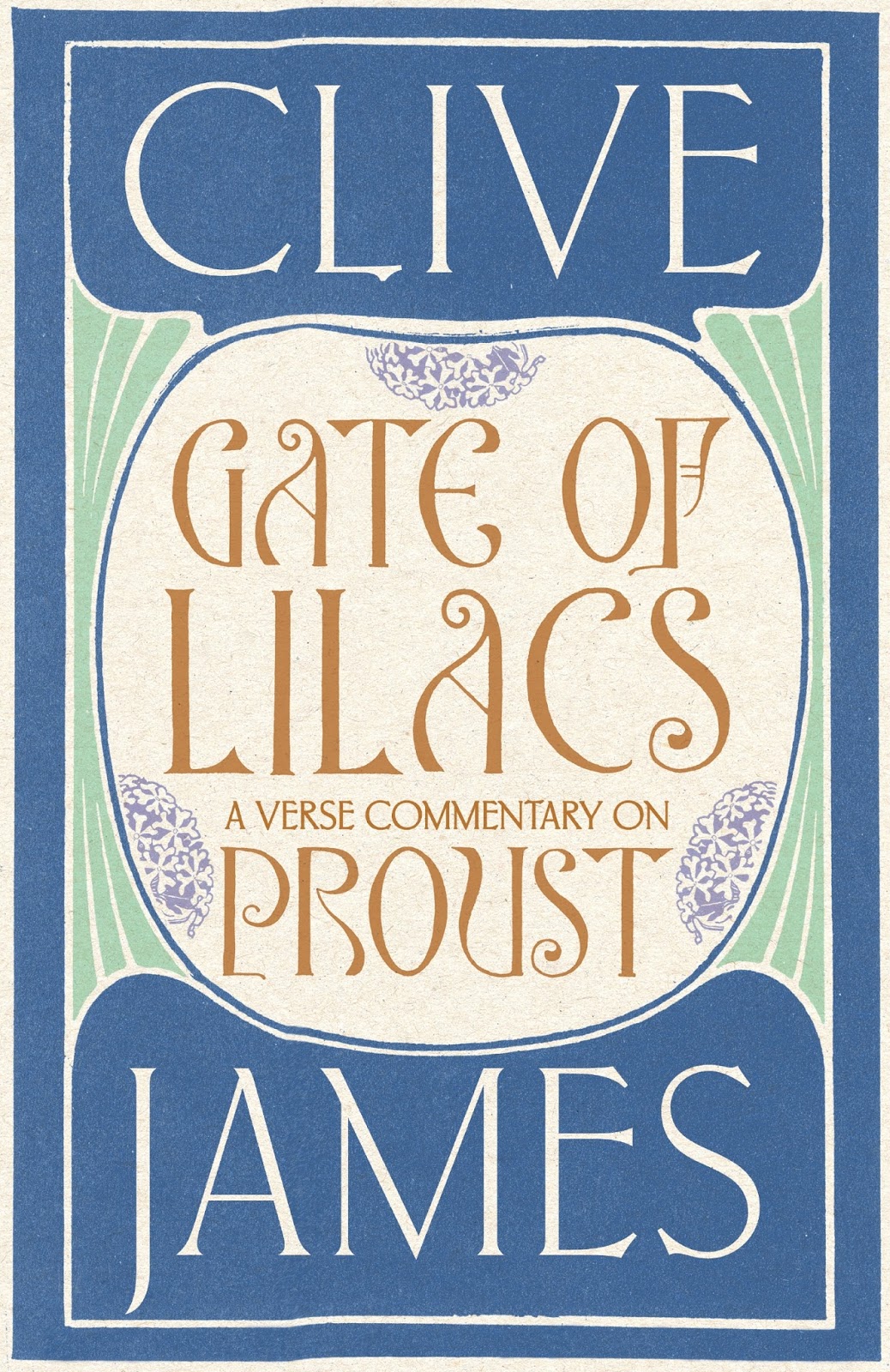
GATE OF LILACS

At night, I asked my father, 'If you could paint your nails any colour right now, what colour would you paint them?' He responded (with surprising alacrity), 'Lilac.' (Why? Because it's spring. Lilac season.) But I thought it perfect for another reason - I had been trying to decide on the perfect colour for an event the following day - Clive James' book launch for his verse-commentary on Proust, called, seemingly in accordance with the time of year: Gate of Lilacs.

It felt serendipitous.


I arrived at Pembroke in a bright red coat, white dress, feeling rather pale lilac about the gills, and plunged into another writerly adventure. At the entrance to Pembroke's Old Library, the new books were on display - Collected Poems, Gate of Lilacs and Sentenced to Life - I overheard a man order several copies. I looked up. Tom Stoppard. 'Halloooo!' (I did not yodel, but it was thrilling all the same.) He looked nice, almost approachable. And then he disappeared into the clutch of Englishmen and women milling around a seated figure.
 

Cambridge, according to one of Clive's oldest fans (102 year old Ann Baer of family Sidgwick) can become quite blasé - being able to boast a roll call of poets, rebels and Nobel prize winners; now the city breathed into the poignant spaces between the lines of the Poet Kid from Kogarah. 'Not a dry eye in the house!' Thus Clive, the Laughing Boy, merry after reading his epitaph. 
[He wrote a song lyric once that went like this:
'I've got the only cure for life, and the cure for life is joy
I'm a crying man that everyone calls Laughing Boy'…]
 

I thought of slinking away after the speeches and wonderful recitation. A small banquet of food was being laid out at one end of the library. I knew I couldn't really face chewing and swallowing in hallowed literary company (Carol Ann Duffy! Mary Beard! Andrew Marr!) but I drifted towards it anyway, just to have a point of focus. And found myself beside Oxford author and media commentator Douglas Murray. 'What is the correct etiquette,' I enquired, 'if you know the name of a famous person, but don't know them at all? For example, is it polite to say 'Hello, Douglas' or is it presumptuous?' Answer: famous people quite like being known, and more, being liked. So now I know. Over munchies, we discussed poetry, memoir and life, but not politics. He was charming, and had beautiful manners because at no point did he indicate by even a flick of the eye that he would rather be hobnobbing with the HobNobs. It was I, in fact, who was still eyeing up Tom Stoppard… 'What do you think?' I asked Douglas, whom I now regarded as the arbiter of good taste, 'is it ghastly for a famous person to have a stranger come up and regale them with personal information?' 'Depends,' said the arbiter. I shared my nugget. 'Definitely go speak to Stoppard. He'll enjoy that story.' But, I still couldn't. Instead, I talked to Prudence Shaw, Clive's brilliant wife, a Dante scholar, and confided in her that sometimes I can't summon the energy to 'achieve' - all I want is to play with my nieces. Play the days away.
 

Finally, a spot had cleared by Clive, and I retired to sit in his shade. I ought to say 'in his light', him being the star, but a friend always offers shade. The first thing Clive said when I sat down was, 'Have you met Tom Stoppard? Go and tell him I sent you.' I jumped up, carte blanche in hand, and accosted the poor man over his edibles. 'Clive sent me!' I chirruped. Oh, he was so lovely to me, so kind and interested - and asked me such pertinent questions about my illness that when we finally came to speak of Other Things, I couldn't remember anything I'd done since (and this is the nugget) I played Thomasina in Arcadia at sixth form. And was kissed for the first time, on a stage, by a boy whose girlfriend was in the audience. A girlfriend whose mother had directed the play. Septimus never kissed Thomasina in quite such a dry, papery way as on that stage.
 

The seats beside the star had finally cleared once more and, laden with coffees, Tom and I (Tom, Clive, Douglas… you see how democratic I am?) sank into chairs. We were just getting snug in a conversation about nostalgia for Bombay, and his time in Darjeeling when A Person cut across me to talk to TS. At first, I smiled politely (I understand, my smile said, I've been trying to do this very thing all afternoon) but finally, I stood up and offered my chair. Take it, I thought. Perhaps this means a great deal to you. (But the rudeness, mes amies!)
 

Never mind, never mind. One cannot collect all the beautiful shells on the beach, as the saying goes… I retired to phone for a taxi with good grace. Every time someone asked me how I knew Clive James, I explained that we meet across the drips. 'My mind is coming into focus again, thanks to Clive,' I told the playwright. It has been foggy for months, if you recall. I even had an MRI on my brain! All fine, all fine. Brain in working order. I feel as though I am at university again, only my lecturer awaits me on a faux leather chair while nurses attend to his (and my) blood pressure, heart rate and other vital signs. We are alive, and this being alive is everything. Now. 

Saturday, 9 June 2012

EATING MARIAN KEYES' GUINNESS CAKE WITH CLIVE JAMES

The day before I shlepped back into hospital for my second round of monoclonals, I decided to bake a cake. Marian Keyes' brand new copy of Saved By Cake needed breaking in. I studied each recipe during the Jubilee weekend and finally decided on the most interesting and unconventional recipe - a combination of Guinness and molasses! Couldn't wait!
There's cinnamon, nutmeg, mace, brown sugar, butter, flour, eggs and some kind of magic because it turned out beautifully. I've almost always baked carrot cakes and Father's personal favourite is a good sponge cake (safe! safe!) so the parents were slightly taken aback by the flavours - but on the eve of a visit to the needles I can't bear to play it safe.

Armed with slices of cake, grapes for balance and a good book (Marian's recent gift), I settled into the armchair for a long infusion. Midway, I sent a jokey tweet to friends with a picture of my needled hand and thought nothing of it, until it appeared as tbough the man in the chair diagonally opposite was staring at me. Did he think I'd taken the photo of him? Slightly unnerved, I thought it was my eyes - maybe he was asleep and, perhaps, locked in that position? But then the tea lady came round and he asked, "D'ye have anymore of those nice buscits?" and something about that Australian accent stirred some kind of memory. I couldn't be sure. An infusion bay! Surely not. I decided to chance a meeting. Everyone else was asleep or lost in thought, so I wheeled my drip over and offered Guinness cake to accompany our cups of tea.

'Twas Clive James! He partook of the cake after I assured him it was a Marian Keyes cake, hence the alcohol content was nothing to be alarmed by; we talked of poetry and fame, form and metre, and the dispensing of both when snubbing imperialism; his long years of being a critic and the short tiring months of being ill. He has leukaemia but was being treated with my favourite drug of choice - Intravenous Immunoglobulins - so feel sure he is in the best of hands. He advised me to look him up, since I seemed to have no knowledge of his many books of poetry. Did you know Clive James was a poet? He was reading a selection of Robert Frost to pass the time...

His infusion ended hours before mine, and after we wished each other well, and he toddled off, a young woman came up to me and told me her husband had just left her because she has stage 4 nephritis and lupus has burned off her face and hair. I assured her she looked beautiful in her paisley headscarf. Shining eyes, gentle soul. Such is life in hospital mes amies... painfully tragic despite the cake and celebrities.

And yet, oh thank goodness, for cake and celebrities :)


http://www.mariankeyes.com/Home
http://www.clivejames.com/