Showing posts with label interviews. Show all posts

Saturday, 2 April 2022

ARTIST TO ARTIST: KRITI BAJAJ, INDEPENDENT EDITOR AND WRITER

photo credit: Sahil Bajaj


I'm a mountain person. I was three years old when I first visited my grandparents' secluded home in the Himalayas. Though I was too young to realise it at the time, the sense of possibility that this new world opened up would stay with me.
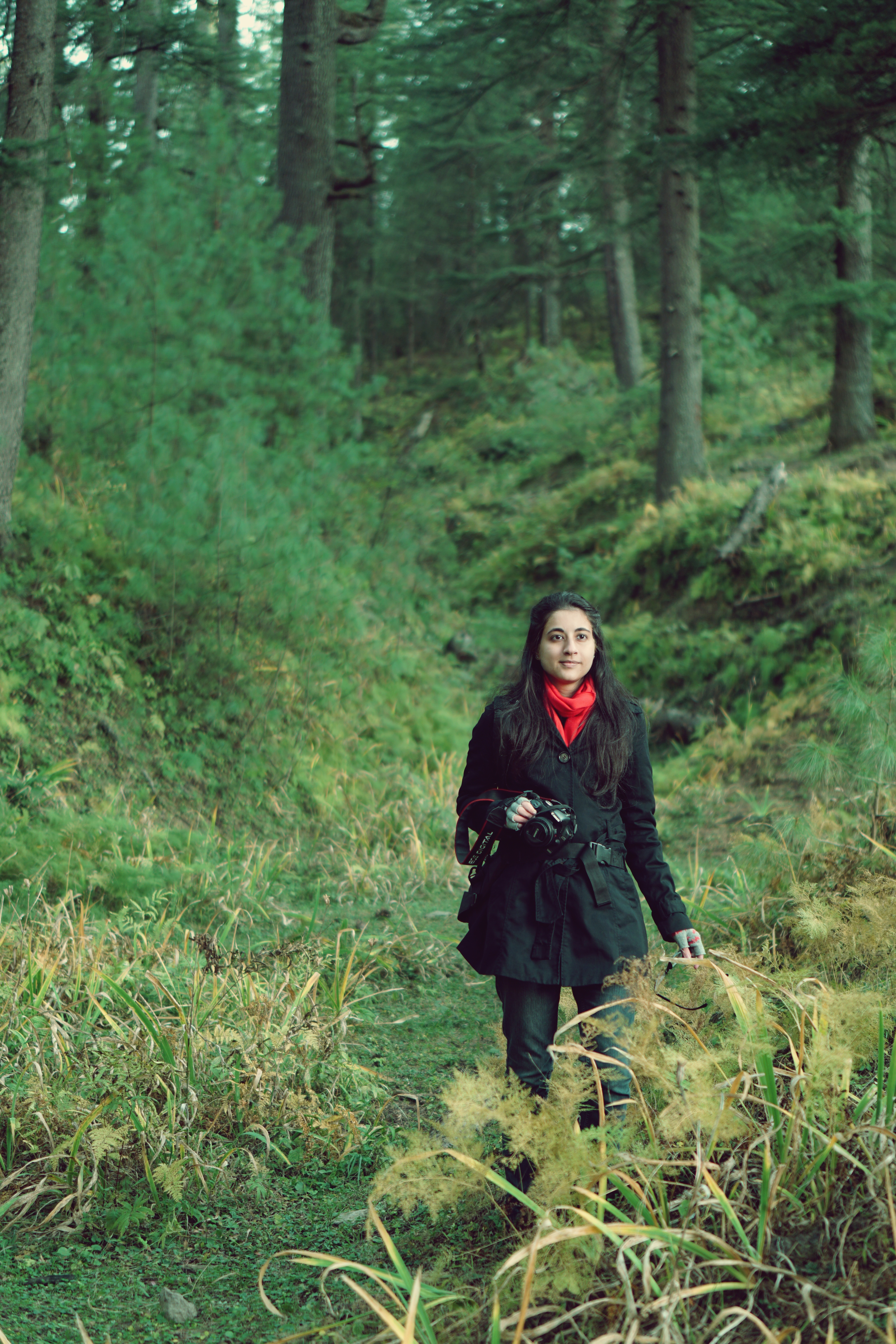
 

Himachal Pradesh, 2016, photo credit: Sahil Bajaj

Kriti, this is how you begin to describe yourself on your website: I've lived in cities my entire life – Bombay, Delhi, London – but every so often, I have a longing for grass studded with clover, starry skies and a majestic view that changes with each cloud and shadow, but is always constant. I mean, is it any wonder we ‘found’ each other? Poets just do! 'Poet’ may not be a term you would use to describe yourself, but I mean it in the way a writer uses her language. So, there you are, three years old in the Himalayas… were there books there? Did you start writing as a child?


There's a whole wall of books, though I can't remember whether this excited me at that age – I was a bit of a late bloomer when it came to reading. It's one of my favourite nooks in my grandparents' home. There was no internet here until a few years ago, and even phones arrived relatively recently. As a child, I used to communicate with my grandparents through letters. Many of the books are encyclopedias and reference texts on everything imaginable; my grandfather had many interests, from carpentry to photography. He once bought the contents of an entire bookshop! 


photo credit: Kriti Bajaj

I used to write poetry before I ever wrote anything else. I remember the first 'serious' poem I wrote was in fifth grade, and it was probably very derivative – I mean, I was only ten – but it felt like I'd found my calling. I'd come across little snippets of poetry at my grandparents' home, newspaper cuttings of poems by Patience Strong that my great-grandmother used to send to my grandmother, which I found wonderfully simple and musical. My nana also loved poetry and would recite some of his favourites often – Omar Khayyam, Swinburne, Henley – and inevitably start crying a few lines in. I wrote poetry all through my school and college years, with rhymes gradually giving way to free verse, and imaginative themes being replaced by real experiences.


There were a few years between the first time I met Clive James and the second. It was during our second encounter that he told me about a young friend he had made on the oncology ward (he and I met on a less specific infusion ward), only to lose her to a rare bone cancer. This friend happened also to be your dear friend, Shikha. Tell us a little about 'Oblomov'?


I met Shikha (known to the world as Oblomov) in my final year of college, when we were editors at a Model United Nations conference, leading a team together, completing each other's sentences and finding that it was very peaceful to curl up in our cabin rather than attend the sessions. We did our Masters in London at the same time too. The best introduction to Shikha is through her own words, so I will direct readers to her beautiful blog. So many amazing people found Shikha through this, and she connected kindred spirits, like you and I. 


Kensington Gardens, Oct 2011, credit: Kriti Bajaj


Clive James, of course, made her very happy through his enthusiastic support of her writing, and his wonderful sense of humour, some of which she shared with me. I reached out to him once in April 2015 with sad news, and we exchanged a few notes. He was very gracious; his words brought comfort. 


Since 2016, you have been on an ancestral quest to discover more about your family tree. Tell us a little about that? I often find myself googling my grandfather who was the first Muslim Chief Justice of Udaipur and aide-de-camp to the Sultan of Zanzibar. I want him to just pop up! I do the same for my great-grandfather, who was another High Court Judge, from my maternal Parsi side. Both were Khan Bahadurs. My maternal grandfather was in the railways like your great grandfathers. Trying to trace the female line is much harder, unless you have someone doing the oral remembering, like my mother. I am so envious of your ability to access from direct sources and digitise your findings - future generations will no doubt be thankful to you!


That's literally how I took a step forward with my research – I Googled my great-grandfather and he popped up! I'd done this for years, but there was nothing. I'd heard stories, seen photos, made family trees, but I was desperate for more. Then I went on a trip with my grandmother to her parents' last home, my first time there, and I felt really close to them even though I'd never known them. When I returned, information was awaiting me. I think the universe was sort of collaborating with me by giving me what I sought right after this trip.

photo credit: Kriti Bajaj

An entire family tree appeared, going back generations. It made me realise that there were ways I could do this research myself. I didn't actually end up using much of the information since I wanted to verify everything on my own, but it was a start. Since then, I've been learning about genealogy through online courses, resources, Facebook groups, and I recently attended my first genealogy conference too. Of course, as you say, the availability of records has made it much easier to trace the lines and connect with more people, places, and contexts. I'm about to embark on research of another branch of my family, for which there will be far less information (and perhaps a lot lost during Partition), but interestingly, we do have access to a handwritten family tree in Urdu that might give us something to work with! 


You went to Lady Shri Ram College. Tell us more about this experience - what is the college’s history? Why were/are you drawn to German particularly? Was it for German film appreciation? 


LSR is a women’s college affiliated with the University of Delhi, though the campus is separate from the other colleges of the university and feels a bit like its own little world. It was founded in 1956 to encourage and enable the higher education of women. My years here were definitely a turning point, because up until then, I'd been more interested in studying the sciences than the arts. But literature was the perfect subject and opened my mind in many ways. I think both the colleges I've attended – LSR and SOAS in London – have shaped and added nuance to the way I view the world and what's happening in it. 


Lady Shri Ram College, Delhi, credit: Kriti Bajaj

I started learning German as a third language in school when I was ten. We had three options: German, French and Sanskrit. I felt drawn to German mostly because it was the underdog and we were tempted with promises of exchange programmes to Germany (which never materialised). I also attended weekend German classes at the Goethe Institut for about three years when I was in college. I enjoy the worlds and cultures that a new language allows access to, and I've tried learning several over the years, but so far, German is the one that stuck. 


How did your interest in Zoroastrian heritage develop? I love that you were able to source a seven month internship at Parzor. (I’ve written for Hamazor.) Give us a sense of that time?


I wasn't very familiar with Zoroastrianism until I did the internship. Dr. Shernaz Cama was my professor at LSR and is also the Director of Parzor, and I'd expressed an interest in working there. I was taking a gap year after completing my Bachelor's degree as I figured out what to do with my life next, and I wanted to try all kinds of work. I also wanted to save money to buy my first camera, so a paid internship helped me meet both goals! I did all kinds of work during this time, from helping redesign brochures and the website, to assisting with sales, exhibitions and photography, as well as compiling Parzor's tenth anniversary souvenir book and covering the occasion for leading Parsi magazines like Hamazor, Parsiana and Fezana. This was the beginning of my freelance writing journey. 


How extraordinary that you wrote a dissertation on mental health in film years before Deepika Padukone became the first Bollywood actress to openly speak about her mental health. What drew you to this topic?


I was studying anthropology at SOAS, and my interest was specifically in visual and media anthropology. But I had a hard time selecting a dissertation topic. In initial sessions with my supervisor, I presented my plan of writing about the role of photography in war, but somehow it didn't feel like the right fit then. (I do love photography and I'm researching its history independently now.) I thought about other topics that made me really eager to know more, because a dissertation is a fairly long road. I'd written one of my term papers on the complex relationship between anthropology and psychology – it was one of the topics we studied – and I'd been fascinated by it. So I decided to combine that with visual culture. I did find a fair amount of research on the portrayal of mental health in Hollywood films, but only one book about Bollywood. I thought this would be a good gap to fill. 

'East of the Sun and West of the Moon', Nielsen, 1914

Back to Bollywood, or rather not, how did your passion for line dancing come about? Why line dancing rather than … well, anything else? You’d fit right into any English or American dance class with that up your sleeve, but what’s the appeal? (I’m an ex Bharatnatyam and tap dancer, but ballet was definitely my true love. Now I just free style in the house, after hours, when no one’s looking…)


I didn't know what line dancing was until I showed up one day for a trial class by Merry Feet, which is one of the only line dance clubs in India. I'd been looking for a way to be physically active and I'm not really fond of going to the gym, so I thought dancing might be a fun way to care for both my physical and mental health. From the beginning, I loved the music, the way that line dancing brought together so many different dance traditions from around the world, the stories behind them, the philosophy of not chasing perfection but learning and repeating patterns, the inclusiveness. I also liked how it was a community or social dance form, but individualistic at the same time – both in that you don't need a partner (I've also learnt salsa and bachata for a while, and felt quite limited by that, though they are beautiful in their own way), and you have the freedom to express yourself within the structure of the choreography. Because of this, we were also able to learn and practice line dancing online throughout the lockdowns in the last two years. 


'In Powder and Crinoline', Nielsen, 1913


I also taught line dancing for a while before moving to Bombay. One of my happiest accomplishments – and this is what I love about teaching, mentoring and also learning – was watching the steady rise of confidence as people went from being very hesitant in the beginning to guiding new learners a few months in without a second thought!


'Untitled', K K Hebbar, 1911-1996

About your many years as editorial manager for an art auction house, you say this: the real perk is getting to lay eyes on masterpieces that otherwise remain hidden away in private collections, as well as stunning gemstones, and centuries-old books and photographs. Tell us about one masterpiece in particular (or a few that spoke to you).


One of the first auctions I witnessed after joining Saffronart featured a beautiful painting by Nicholas Roerich. I'd been to his former home in Naggar a few years prior, and there are paintings there, but this one was quite different, almost haunting. Another artist whose work I really like is Jehangir Sabavala. Apart from art, I was fascinated by 19th century photographic processes like ambrotypes and stereoscopes, as well as rare and limited edition books such as those with illustrations by Kay Nielsen and Arthur Rackham. 


'The Dance in Cupid's Alley', Rackham, 1904

The colleague who sat nearest to me was in the jewellery department and would routinely receive boxes of glittering creations that were hard to look away from. I've never really been into jewellery but I do like beautiful things, and I've learned everything I now know about gemstones and techniques (which is probably just scratching the surface) from her. She even guided me when I was picking out my engagement/wedding ring!
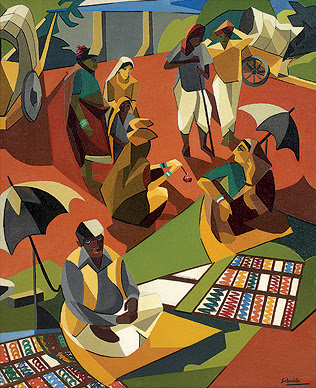
 

'The Bangle Sellers', Sabavala, 1954

Your 2021 calendar or cookbook of food inspired directly from books is so worth reading. Of all your many worthy accomplishments, I would recommend this as the most delightful and delicious. Which brings me to my final question - as a fellow blogger and non-fiction writer who secretly longs only to write fiction (but seems never to do so), do you fantasise about writing a novel? I ask this because I can easily imagine your novel - it will weave in the art world, and the food world, it will possess the photographer’s eye for detail and the researcher’s eye for historical/ genealogical accuracy. Am I way off course here? And if so, what dreams do you dream of next?


I think everyone who enjoys writing hopes to write a novel some day! When I was young and innocent, I attempted starting a couple – a fun exercise while it lasted, planning the stories, chapters, characters and so on. But I haven't attempted anything of the sort in a long time. The closest I've come is writing several dozen pages about my family history, a compilation of my research. I've always thought I'd write a book someday, when the right story comes along, so for now, I'm just waiting patiently. I used to think it would be fiction, because that's what I chiefly read, but I'm not so sure anymore. I've read some delightful non-fiction, and I wouldn't be averse to it if the story intrigued me. I have some latent ideas, though none are quite developed yet. 


This year, I want to build my business further, continue my research, put time and resources into honing existing skills, and hopefully learn a few new ones. I also hope I'll get a chance to travel a bit and have a few little adventures here and there. 


from Kriti's blog 'Onwards'


Kriti, Clive’s sign off on all his emails to me was ‘Onwards’, the title of your blog, which was born months before you ever interacted with him. As you say, there are connections in everything. You chose 'Onward' as the title for your blog as a reminder to keep moving, keep learning, keep trying. Even when you don't really know where you are going, you remember that journeys are important. I wish you all the success and adventures your writing fingers and creative heart desire. Thank you for opening a little window into your life for my readers! 


Kriti can be found at her website www.kritibajaj.com


photo credit: Kriti Bajaj

Friday, 21 January 2022

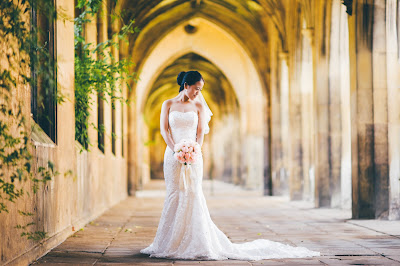
ARTIST TO ARTIST: CHRIS BOLAND, WEDDING PHOTOGRAPHER

ARTIST TO ARTIST: WITH CHRIS BOLAND, CAMBRIDGE WEDDING PHOTOGRAPHER


Chris, let us leap, with joy and faith, into the new year, by discussing Romance! These are the very first lines on your website’s home page… ‘I love to document the happiness and romance of wedding days in an elegant and beautiful style.’ Tell me about the beginnings of capturing romance in your life. Did it start with a person you were compelled to photograph? Or a beautiful, stylish camera?!

That’s an excellent and terrifying idea - let’s go for it! I would say there wasn’t a particular romantic relationship or particular person that inspired me to photograph weddings, but I think I found the idea of photography itself quite romantic. In weddings there is the romance of the relationship itself, but also the romance of the occasion and the romance of the more ordinary, less obvious moments. Maybe it’s a romantic perspective you can bring even to the everyday. 


Early on, I didn’t feel any romance towards a camera, but I’ve since bought a few that are quite inspiring. I think photographing with film is quite romantic. It’s slow and less practical and what it gives you is sometimes hard to describe.

I have written a little about this in one of my YouTube videos:


I love the knowing comments beneath that video - expertise is a beautiful thing. In the next lines, you go on to say that ‘no wedding is ever too far’ for you to travel to. Where is the furthest you have travelled from your Cambridge base? How was it and how did it come about?

I certainly make sure to let people know that I will travel anywhere for a wedding. 'Cambridge and worldwide' is how I think I describe it. That covers most places, right? I really love being in new places with new people and being part of a wedding as a photographer is a wonderful experience. You're suddenly at the heart of something special, despite being in an unfamiliar place. The furthest I’ve been to is Australia. That was for a couple who had family over there and also closer to home here. They had two ceremonies and they asked me to photograph them both. It was a bit of a surprise as I was just starting out, but it was wonderful to see a little bit of the country. On the wedding day itself, it wasn’t a greatly different experience from being in England. A wedding in Bangalore was for a friend of mine who was the bride and that was much more of a new experience culturally. That was different and wonderful because of it. 


Where did you grow up and were cameras and photography part of those growing up years?

I was born in Cambridge and lived nearby in St Ives for the first five years of my life - then there were five years in Surrey, then back living here ever since. Photography wasn't a big part of growing up - although I have good memories of my grandparents projecting photographic slides of holiday and family photos to us in their living room. My grandfather was a photographer for a time. I also remember us projecting the 8mm films my dad took while he was in the navy. So photography was definitely around, but it didn't lead directly to me loving photography. Music was always my big love and I found photography through that. In my early twenties, I used to write a music review page for the local newspaper and whenever I reviewed a show they always wanted pictures. So they would arrange photopasses for me at the concerts and very quickly I fell in love with and was addicted to photographing music concerts. I remember the first show I photographed for the paper was Mercury Rev at the Cambridge Junction. They started with the beautiful and dramatic The Dark Is Rising and I spent the next ten minutes or so in an absolute daze getting through five rolls of film. I didn't really know what I was doing - but that's how you start.


You mention another word to describe your style: ‘documentary’. Tell us more about this aspect of your photography. Are you a documentarian in any other field? What did you study at college or university?

I think documentary photography refers to just letting the day and events happen rather than constantly staging scenes for the purpose of photos. I think with wedding photography that’s a good place to start, but it’s not a strict rule. I think I get on better with couples who like the idea of documentary photography -  it’s a more relaxed approach to capturing the day. It also ties in with the idea of seeing romance and beauty in ordinary things. 

Posed ‘perfection’ often lacks something and it’s better to capture a real moment. However, sometimes making photos and posing a little is fun and actually part of the day. So with weddings that line blurs and I'm happy with that.

I guess the little videos I make on YouTube are documentary in their nature too. They are mostly slideshows of my photos with my thoughts narrated over the top. They document visits to different cities and different events. I’m currently writing one about a wedding I photographed in Spain last year.

And to answer your question about what I studied - it was psychology and politics. They are two subjects I chose because I was intrigued by them and I thought I’d enjoy the course. I love the pictures Pete Souza took documenting Barack Obama's time as president - I’d absolutely love to do something like that.


I know you say your intention is not to create Hollywood style films, but may I beg to differ? The wedding videos you have posted to your website are absolutely worthy of, if not better than, most Hollywood or British rom-coms - I was completely drawn in and wanted to know more about not only the couples, but various other family members and friends! Had I known you were a videographer too, I would definitely have asked you to film Dad’s 80th birthday rather than simply photograph it. When did you start doing both? 

Firstly, thank you. It has been quite recently that I have become interested in filming. Well, the past couple of years or so and one of those was a very quiet pandemic wedding season!  It’s really interesting that you note the contrast between the way I describe the films and how they actually look. There is a tension there. My instinct at the moment is that they are more slick than I would like. I’m really still trying to find my style, but I would like them to be even more filmic in their look and more intimate. I have an idea of them being the most beautiful home movies possible. Like they were filmed by a close friend of the couple with 16mm film. That’s my idea at least. 


I can only begin to imagine how happy the couples are with your videography - the only home movie we have is a VHS video from when I was ten years old, but it has my grandfather in it, and so he comes alive anytime we watch it. It's so precious. Weddings aside, you are also the man on the scene during Cambridge’s various literary events. You have photographed a host of the artistic and scientific elite. Would you share how this came about? And perhaps some anecdotes of these famous faces being captured by you?

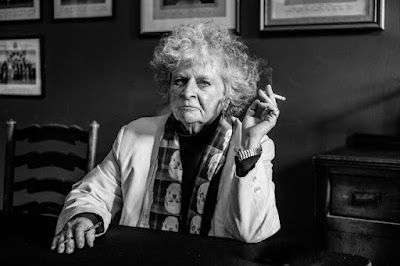
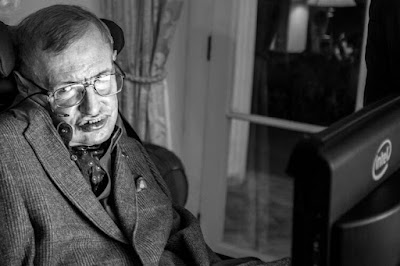
Many years ago a friend put me in touch with the organisers of a local literary festival and I photographed that for many years up until just a couple of years ago. I enjoyed it quite a lot - especially when I got to photograph an author I liked. More recently I have photographed events at the Cambridge Union Society and there have been some fantastic people to photograph there. They’ll sit talking or listening on these big chairs in the union chamber and it’s like an hour-long portrait session for me. I'm not sure I have any great anecdotes unfortunately - I mostly just recall the impression you'd get from spending a short time in the company of different people. Some people are guarded (both literally and metaphorically), but I'm one for appreciating and remembering friendliness and openness. I remember Iain Banks was so warm and Dame Prue Leith queued for ages to get a book signed when I'm sure she could have just met the author in the green room. And the playwright Michael Frayn said I looked like a spy - which was a compliment, obviously.


There is clearly so much love and passion in the work you do, so is this where you feel settled? Or do you have some future plans? Something you would like to expand into or include?

While I enjoy photographing and filming weddings, I would love to do more portrait photography. It would be great to do some work for magazines to go with editorial pieces or interviews.

I have had an idea to do a series of interviews where I take a person's portrait and interview them while I do it. It's just an idea and thinking about it now - I'm not sure if it's an especially good idea. People don't look great while they are talking and actually encouraging that might not make for great photos. It's still an idea in the back of my head though - you never know, it could work.

Pretty sure you could make it work, Chris. I think that a docu-style collaboration between words and images sounds ideal. I would think that, as a writer and daughter of a portrait artist! Speaking of which, thank you again for the photographs you captured of our family at a time when we could all be together. This really is an art, and if not timeless, time-bending. Good luck, my friend, and thank you for the interview!


Chris can be found at his website: www.chrisboland.com


Monday, 10 January 2022

INTERVIEW WITH DR. JANE WILSON-HOWARTH

Jane Wilson-Howarth's first book was published in 1990 - 'Lemurs of the Lost World: exploring the forests and crocodile caves of Madagascar' - and she has published several other books, across genres, since. This quote from her own biography gives you an insight into Jane: while other girls were experimenting with makeup and exploring the impact on the boys of rolling up the waistbands of their skirts to show more leg, I was nerdily nose-down in our garden pond, learning about reproductive behaviour in minuscule cyclops and water-fleas. After graduating with a zoology degree from Plymouth, Jane travelled to Nepal, for the first time. Travel gave me a particular loathing of leeches and parasites, as well as an indignation about inequality of access to health care. Ultimately this pushed me towards becoming medically qualified. I have worked as a GP (family physician) in Cambridgeshire for 15 years and have worked in other medical roles overseas for about 13 years.
I was honoured to be interviewed by my friend and fellow author for her blog. 

Author to Author
 
I first met poet and author Shaista Tayabali when I was invited to speak at a readers group in Cambridgeshire many years ago and we made a connection that has continued. I have been following her inspiring blog since I became aware of it and her patient perspectives have often given me pause for thought in my own medical practise. She has just launched her own memoir and generously agreed to answer some questions about it.


Shaista Tayabali, do please tell us a little about your new book and who your target audience is.
 
As with any book, a writer’s first audience is herself. In my case, I had returned home from my diagnosis in 1997, googled ‘writers with lupus’ and ‘books written by famous writers with lupus’, searching for something literary, poetic. Over the years, I would check again and again, and nothing of the sort I yearned for, existed. A Kahlil Gibran-ish translation of my life! It dawned on me that I would need to write the book myself, for myself. As I worked through draft after draft, three audiences became clear: the lupus patient, the non-lupus patient and the medic. If I had to pick one in particular, it would be the medic. I was aiming to be on par with Paul Kalanithi, Atul Gawande, Siddharth Mukherji, Oliver Sacks. In other words, I was tired of being the fodder for best-selling doctor-writers!!
 

You have written, ‘I don't write for catharsis. I write to tell the truth of my life.’ What do you mean by this?
 
Throughout the writing of this book, people always assumed that my book was intended to ‘help’ lupus patients. ‘This book will really help people like you’ – it was an understandable comment but was neither the genesis nor the ongoing pulling force. I write in the vein of so many women before me, and still writing – like Susan Sontag, Alice Walker, Deborah Levy – but also David Sedaris, Marian Keyes, Samantha Irby – memoirists, essayists – writing for the love of language, through trauma, via poetry or humour. Yes, there is something of transformation in using language as a survival mechanism, but catharsis suggests the thing itself is extinguished. It isn’t. The thing I am writing about – my life – goes on. Thankfully!
 

Do you keep a diary, Shaista? Is it important for writers to do so?
 
I don’t keep a diary in the way of David Sedaris, for example – who is religious about it – but I have always kept poetry journals, in which I also periodically record moments in prose. When I started my blog in 2009, that became a diary of sorts. There are gaps in everything – I am not a disciplined, routine based person, but I am always, and always writing – lots of letters, emails. I had the most beloved friend, Mary, who was 60 years older than me. She was a profoundly energetic letter (and later email) writer until the very end – she influenced me endlessly, just by being herself. I think writers find a way to write.
 

How long did it take to complete the book and have it in a form you were willing to share with people beyond your family and friends?
 
Well, I started the first line on January 1st, 2013 and published it on December 3rd, 2021! I began it during my Masters in Creative Writing Fiction. I had a novel nicely begun, which my fellow classmates were enthusiastic about, and I swerved. I decided to focus on memoir instead, for my dissertation. So that meant the first draft of my book was not only read but marked. My younger brother was my first reader/critic – and he advised cutting the first quarter, which focused on our life in India – and my older brother was my last proper reader/critic – and he took a similar axe to the draft he read! Along the way, I’d send the book out, and it kept getting rejected by agents. Which would make me go back to it with more scalpels. Until, finally, at the start of this year, I knew it was as right as I could make it.
 

Reading your work, it feels like becoming a poet / writer is your raison d’être …  Do you think people still make judgements about the quality of your writing according to whether you are ‘properly’ published or not? After all, plenty of rubbish is published by celebrities who can’t write and plenty of excellent work is self-published.
 
‘A hundred percent!’ to quote the young ones… I write it in my early chapter – I was always being asked if I was published, by people who openly said they didn’t even read. Nothing has changed in terms of the legitimacy lent by traditional publishing. The gatekeepers say they aren’t gatekeepers, but they are. And several agents were honest about why they were rejecting me – that it had nothing to do with my writing, and everything to do with the subject matter of my book being unsaleable. My poetry has consistently been rejected too – hence my self-publication via my blog and first collection. It’s tiring to be honest, Jane. Super tiring. Because – and is this arrogant? – I know I can write! (Clive James always thought I was arrogant, but he approved of the arrogance, really – he just wished I’d look up to him more!)
Hear, hear, Shaista! It seems to be that a little arrogance in the correct quarters is what folks need to suceed – in all walks of life. Perhaps calling it self-confidence rather than arrogance would sit easier with you!
 

I am a bit of a stickler for ‘correct’ writing and am always pulled up short when I notice a typo or punctuation error in a book produced by conventional publishers. It is hard to pick up typos yet there was not one in your book! Congratulations. How did you manage that? How many readers helped by checking through it?
 
Ha ha! That’s funny, because my younger brother wrote the same thing to me after he finished reading the book. He said he was thinking this throughout his reading. And he says the same thing with my handwritten poetry in my journals. ‘How do you never make a mistake?!’ I do make mistakes, but to answer your question: no readers helped with checking or proof-reading. Only me, over and over and over and over again!! As you know from our own personal connection, I have been editing things for other people for years – since my university days, and probably even at school and sixth form. My consultant calls me his Korrectorin!
 

I was slightly shocked at your observations about the way people imply that even if you have a life-altering illness, doing nothing is still considered unacceptable verging on the sinful. Do you think having a strong work ethic is a good or a bad thing?
 
I think those are two very different concepts you are holding there – and it has been interesting to watch the world wrestle with both during this pandemic. People expect to get better when they are ill. They are irritated by anything that stops forward movement. Progress, when you have auto-immunity and chronic illness, looks very different. Progress can be a tiny turn in the late evening, after a horribly stuck day. I have never actually ‘done nothing’ on the inside. I am always busy living, inside. It’s just not very interesting on the outside. I don’t think the ill lack a strong work ethic. And I think placing the words ‘strong work ethic’ beside ‘good’ and ‘bad’ already implies a favourable judgment towards ‘good’? I do work very hard, inside.
 

You wrote, Shaista, ‘A friend visited and did not like to see the tears in my eyes, the tiredness. I am a river of sadness,’ I sighed.
‘Well you can’t be,’ he said, sternly. ‘There’s no such thing. Rivers move and change and take things away with them and pick things up, like flowers and happiness. Write me a happy poem!’
How do you manage to marshal positivity when you are facing so many challenges?
 
When I was little, my grandfather told me that my smile made him happy, that me being cheerful made his day better. He was very frail at the time, and I loved him very much. Once feminism really took root alongside serious illness, I took time to examine this business of smiling. Who was I smiling for? Why was I smiling? I stopped for a while. And discovered, slowly, that being cheerful, or perhaps bringing cheer, is an essential part of who I am, regardless of the patriarchy. I don’t think in terms of positive and negative, which, as a former Chemistry student, only remind me of electrons! I know I make a difference with my cheer – it has a visible and palpable effect on the person I am with and on me as well. Living with Dad, who lost his sight almost twenty years ago, also provides a daily exercise in marshalling cheer – cheer is light, translated.
 

I was interested that you feel doctors critically judge what symptoms are physical in origin and which due to psychological effects or diagnoses. Do you consider this classification of disease into either physical or mental important?
 
I was sent to a psychiatrist when I was much younger, and I argued my way out as though I were in court. I had no desire to have anyone decide for me what my mind meant. I may have benefitted from that particular doctor, who turned out to be a lovely man, but I knew I wanted my mind for myself. ‘Women with illness’ is a landscape unto itself – we have huge football fields worth of restoration to be done. I was a teenage girl when I entered the NHS and I was treated with incredibly abrasive language. My resultant tears were constantly perplexing, and frustrating to the doctors. As though being diagnosed with a life-threatening disease ought to have no emotional or psychological impact. Mental impact from physical disease is inevitable, just as mental illness plays havoc on the body, eventually, if not immediately. If the two aren’t woven together, your patient falls apart. But modern medicine’s classifications and separated departments don’t allow for a braiding of mind and body. Individual doctors make or break us, according to their levels of compassionate intelligence.
 

If I mention I had a child who died, many people react as if they need sympathy because of hearing this sad fact. When you mention your father is blind or your life is dominated by illness, people also seem to be in need of comfort. It is so odd, isn't it! Do you have a way of dealing with such responses?
 
Yes, it’s the conundrum we are constantly faced with: ‘what to say, what not to say’, when you haven’t shared the same human experience. After twenty years, I can usually see a response coming, and employ ninja techniques of getting out of or around the other person’s needs and/or awkwardness. I know my father’s pride, for example, so I simply conjure up a humorous anecdote, one that will spin the conversation onto lighter ground. I am very fortunate that I live with two people who don’t expect anything from me. They hope, but don’t expect. And they are always simpatico. So this makes me able to be generous with others! People who have sympathy for me, rather than expecting sympathy from me, are the ones who become true friends.
 

You mentioned that one of your consultants shared an anecdote about another of his patients. Quite rightly he didn’t identify the patient but you felt it wasn’t the consultant’s right to share the story, even if the patient wasn’t identifiable and he intended the tale to help you? When is it acceptable to share others’ stories? What was it that you didn’t like? Was it that you feared he might betray patient confidentiality regarding you?
 
You are referring to a very specific anecdote in the book, during my three-month admission, my most gruelling admission. When the consultant, a man I had only just met during this admission, casually discussed me wearing diapers, because another of his female patients, around my age, had found herself in the unfortunate circumstance of having to resort to them, I found nothing helpful about his offering. It brought me no comfort. As it was, my symptoms cleared up as my inflammatory markers calmed down. His comment was not necessary. I hadn’t asked for practical, sanitary advice. I was just reporting the day’s symptoms during his very brief ward round. His sharing of her circumstance presumed a certain future for me, and that only led to my despair after he left.
You say, ‘Quite rightly he didn’t identify the other patient’ – but here is another situation: as a newly diagnosed teenager, I was desperate for the Rheumatology department to put me in touch with a single other patient. I had never heard of lupus, and I was so lonely, so unhappy. I asked on multiple occasions if my consultant could at least share something concrete about another of his patients, so that I might feel less alone. He never did.
Later, I offered myself to the department, as a point of contact for any newly diagnosed patient – but I was never taken up on it. The confidentiality boundaries that doctors have are not necessarily the ones that we need or appreciate. It’s very complex, isn’t it?   
 

You say, ‘Just as the triggers for depression are correct and present every day, so are triggers for joy.’ Can you share any tips for accessing what is joyous in life?

Well, I can certainly share what is joyous in mine! I am blessed with wonderful friends, who live scattered across the globe. On the occasions when we meet, I draw sustenance from them, but then, in our long absences, I continue to draw on their proffered help, spiritually. On a low, tearful day, I call to mind any one of my family and friends, doctor friends too, and either imagine conversations with them, or sit down to write a letter. In the writing, I am in dialogue, and my friend, far away, busy in their life, is unconsciously bringing me support, energy and ultimately, joy. I say ‘unconsciously’, but when, as a true friend, you offer yourself, ‘I am here for you’, I really take you up on it! Even when you don’t know. I carry the strength and spirit of those who love me, everywhere I go. That’s how I survive hospital and seeming isolation. Bookending my days and nights are my beloved parents. And of course – the children, who are my endless resource of joy – they live in the now, and demand I only be myself, which is easy enough for me, with them. 


I would imagine that your blog helps others. Do you know who reads your blog and do you have any heart-warming stories of those you have connected with through it? Do please share a link to it.

One interesting thing about my blog readership, and this perhaps also applies to my book, is that I don’t have an obvious lupus patient following. My readers tend to be writers, artists, poet-thinkers. I do know many of my readers because they have written personally to me, and I have made some extraordinary friends. Many of them found me first – I still can’t believe that I was found by Sherry, who lives in Tofino, Canada or Jeanne-ming, who lives in Chiang Mai, Thailand, or Maggie May in California, or Ruth in Michigan or Terresa in Utah… Sherry and I nearly met a few years ago, when I was supposed to visit my family in Vancouver but I ended up in hospital with an infection the day before the flight. I have met only Terresa and Jeanne-ming in person – and they were wonderful moments. Terresa and I walked the Cambridge cobblestones – I took her to The Haunted Bookshop, off King’s Parade… Ming is a soulmate for sure. We finally met up in Malaysia, the in between place for us – and it was like a coming home. She is an artist of the most unique sort and sent me a piece of art that I absolutely treasure. I came home from an eight-hour monoclonal antibody therapy infusion to find the parcel. I wrote about my soulmate artist friend in my blog, Lupus in Flight: click here to read more radiant joy.
 

What global issues are you most passionate about? Do injustices get to you?
 
The safety of women. The rights of our bodies. Our voices. The protection of children, their rights, their voices. Injustice is a living, breathing force every minute of someone’s life, somewhere. When you are very ill, and especially in physical pain, it is unbearable to think that you are a part of the same species who inflict torture upon a body before them. How? I don’t want to know, really. All I know is that at my darkest point, when my eyes were failing me, operations were frequent, a corneal ulcer grew, and all I could think was I belong in the same world as those who commit genocide – the Holocaust and the Rwandan massacre. How do we move beyond that? We are all made of the same stuff. It’s ghastly to think that. And yet… there is light. A friend rang just at my lowest, darkest. He is a man of faith, so his perspective was Christian – Jesus is an embodiment of who we also can be… the news doesn’t allow us to hold on to the necessary threads of light for very long, but we had Desmond Tutu, we have Malala.
 

Do you have another work in progress?
 
I have so many books cooking in my head – but specifically my next poetry collection is almost ready, and the novel I began has waited patiently for eight years…
 

Thanks so much for sharing so much, so succinctly, Shaista Tayabali. Would you also let us have any social media links please?
 
I think my blog is really my best social media link: Lupus in Flight but I am also on Instagram @shaistatayabali. The memoir is out in paperback and for kindle; here's the link on the UK amazon site: lupus on amazon